A trusted name in entrepreneurship, a new product to bring to market, and no marketing team. We became that team: an acquisition engine built from zero in three and a half weeks, validated as a POC, on track for the lead target set for March 2027 — and an SEO/GEO programme now under way.
By Audrey Benoit, Managing Partner Belly & Brain — updated 10 September 2026
An acquisition engine built from zero in three and a half weeks, validated over a three-month POC, and on track for the lead target set for March 2027. Here is how Wikipreneurs, the Belgian reference for business creation, launched its new Start & Go service without a marketing team — and why speed of execution mattered as much as strategy.
In short
Wikipreneurs had a brand, SEO authority and an audience — but nobody to turn them into customers for its new product. Belly & Brain acted as its marketing team: a dedicated site and landing pages, CRM, paid campaigns, mailings and nurturing set up in three and a half weeks, then run as a POC for three months. The engine now runs in steady state and is on track for the monthly lead target set for March 2027; the SEO/GEO programme has taken over.
— Audrey Benoit, Belly & Brain
Contents
Wikipreneurs has supported future Belgian entrepreneurs for years, from the first idea to the incorporation of their company. Its founder, Xavier De Poorter, has accompanied more than 1,500 founders. The site holds hundreds of expert pieces and an organic presence most platforms would envy. In 2026, Wikipreneurs launched Start & Go, a turnkey company-creation service, alongside a financial-plan service.
The short answer: everything existed except the execution. Wikipreneurs had the brand, the audience and a product strategy defined with us. What was missing was a team to build the engine that would turn that strategy into customers — a sales site, campaigns, CRM, follow-ups, measurement — and to run it. The founder didn't need more advice; he needed someone to take the keyboard.
Two constraints framed the work: start from zero on the commercial tooling, and move fast — a product launch cannot be replayed.
In three and a half weeks, the full engine was in place. We worked as Wikipreneurs' in-house marketing team, from the product strategy set with the founder.
Rather than squeezing sales pages into an editorial site built to inform, we built a "speedboat": a dedicated site, go.wikipreneurs.be, designed for the sales-capture techniques we had planned — Start & Go and Plan Financier landing pages, a short path, forms and payment built in — free from the constraints of the main site. The Zoho CRM was built from scratch: lead capture, onboarding, nurturing flows. The lead-to-order process was streamlined — CRM-triggered confirmation, payment links, automated follow-ups — to remove the friction that was losing sales. Measurement was in place from day one: event and conversion tracking, lead-management reporting, to steer rather than observe.
On acquisition, we ran the paid campaigns ourselves: Google Ads search campaigns structured per product, on the queries closest to a purchase decision, with continuous optimisation of bids, budget allocation and cost per lead. In parallel, we activated the audience Wikipreneurs already had: regular mailings to the member base to bring it to the Start & Go offer, and automated nurturing sequences for every new lead, through to the order. Historical members were onboarded into the CRM alongside new leads — a passive audience turned into a managed pipeline.
We then ran the whole as a POC for three months, with optimisation sprints on the landing pages: engagement, capture, conversion, cost per lead, conversion into orders.
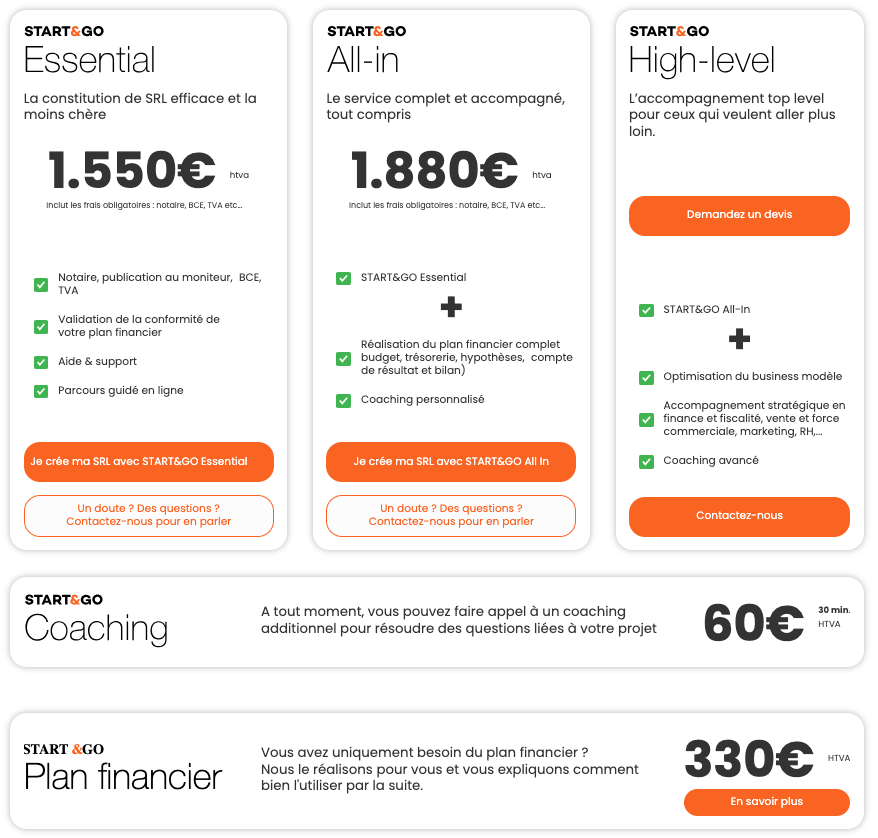
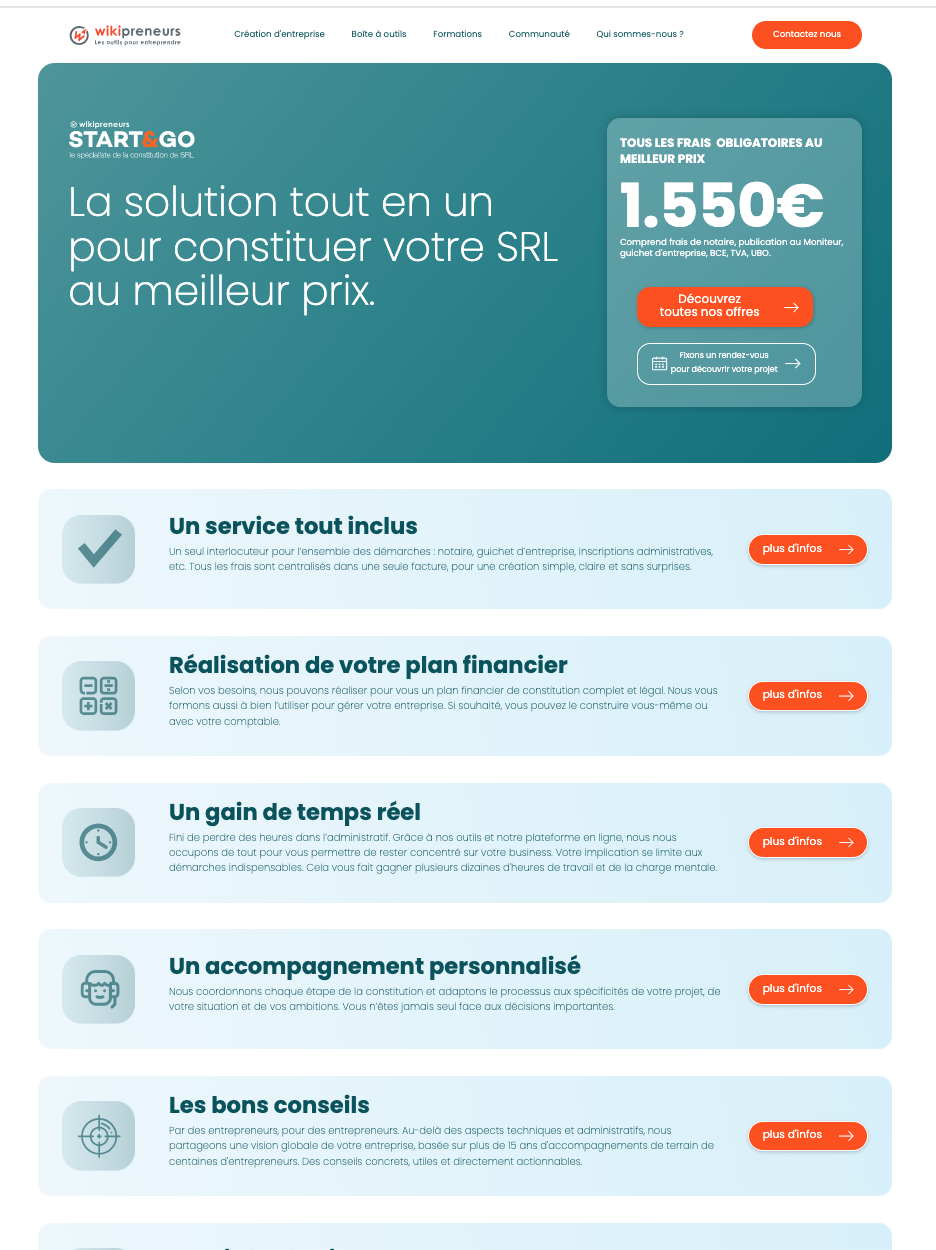
The founder had set a monthly lead target to reach by March 2027. After a few months of activity, the POC is validated, the engine is running and the target is within reach. Wikipreneurs' Start & Go service has already delivered close to 90 company creations in just a few months.
What makes the difference is not a single channel but the chain: demand generated by paid, an existing audience reactivated by mailings, a CRM that drops nothing, and a conversion funnel worked sprint after sprint. It is that lead-to-order conversion, more than lead volume, that carries the trajectory towards the target.
The next workstream is open: positioning Wikipreneurs not only in Google, but in the AI answers entrepreneurs increasingly ask first. The first SEO/GEO results, six weeks after go-live, are here →
At Wikipreneurs, three and a half weeks for the foundation — speedboat site and landing pages, CRM, campaigns, mailings, tracking — then three months of POC to optimise it. The duration mostly depends on what already exists in terms of data and tools.
As soon as there is a delay between first contact and order, yes. Without a CRM, leads get lost between the form and the sale; with one, every follow-up, payment and confirmation can be automated.
Yes, provided there is a clear offer and a dedicated landing page. At Wikipreneurs, the member base was reactivated towards Start & Go and onboarded into the CRM like any other lead.
It generates demand, but it doesn't make the sale. The landing page, the CRM and the follow-ups are what turn a paid click into an order — and that is where the trajectory towards the target is built.
Taking on execution end to end — not just advising — for a defined period, then handing over or continuing in run mode as needed.
The engine moves to run mode with the client's team, and the structural work begins: here, the SEO/GEO programme to anchor Wikipreneurs in Google and in AI answers.
If you have a strategy and not the hands to execute it, book a call or get in touch. We start from what you already have.
Ready when you are
30 minutes. No pitch deck. Just an honest conversation about where you are and where you want to go.
A project in mind? Let’s talk.

Belly for instinct, Brain for evidence. A digital & marketing consultancy for startups, SMEs and large groups, in Belgium and abroad.
Follow us on LinkedIn